The first couple of days after a wisdom tooth extraction are rarely pleasant. The numbness fades, your jaw feels worked over, and eating can be awkward. Still, there are reliable ways to stay comfortable without doing anything that slows healing. This guide focuses on wisdom teeth removal pain relief that tends to help most people in the first 48 hours, plus a few warning signs that deserve a call to your dentist.
What “normal” looks like in the first two days
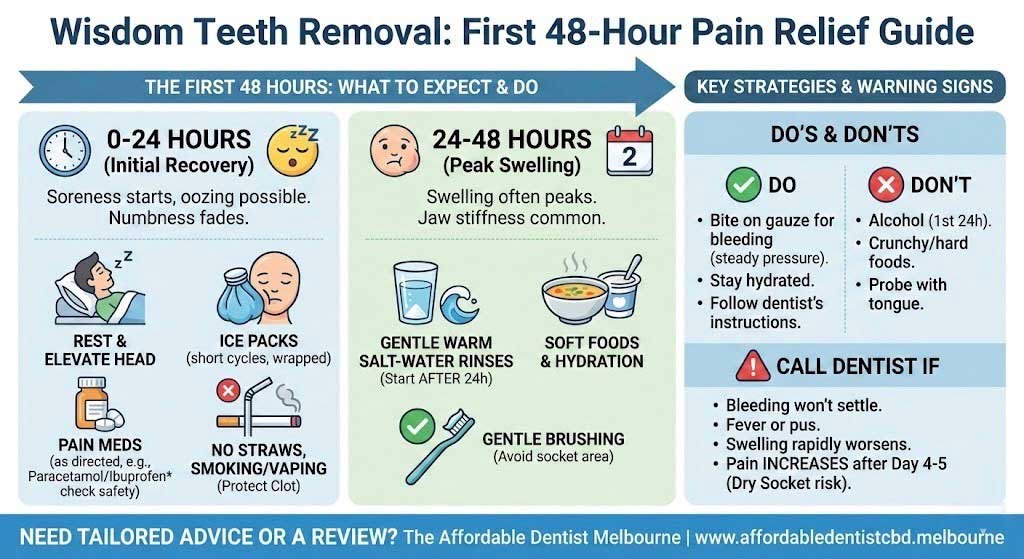
Soreness usually starts once the anaesthetic wears off. Swelling is common and often peaks around day two. A bit of oozing can happen early on, and jaw stiffness is also typical after having your mouth held open for a while. Postoperative guidance commonly describes these early effects as part of the expected recovery pattern.
1. Pain medicines: a practical approach
If you were told to take pain relief before the numbness fully disappears, follow that plan. General aftercare advice often lists paracetamol and, for many people, ibuprofen as options for postoperative dental pain.
Studies suggest ibuprofen can provide stronger pain relief than paracetamol alone after lower wisdom tooth surgery at commonly used doses, but it isn’t suitable for everyone.
Keep it safe and simple:
- Follow your dentist or surgeon’s instructions.
- Do not exceed the maximum daily dose on the packet or prescription.
- Avoid aspirin unless a clinician tells you to use it, as it can increase bleeding.
Some experts advise avoiding ibuprofen because it may lead to extra bleeding in certain cases. If you’re still bleeding easily, have stomach ulcers, kidney disease, NSAID-sensitive asthma, you’re pregnant, or you take blood thinners, check first.
2. Ice pack for wisdom teeth swelling (first 48 hours)
Cold packs are one of the few home measures that reliably earn their keep. A wrapped ice pack against the cheek can reduce swelling and dull the ache, used in short cycles rather than continuously.
Rest helps too. Plan for a quiet day, avoid strenuous exercise, and keep your head slightly elevated with an extra pillow when you sleep to reduce throbbing.
3. Protect the clot: comfort now, fewer complications later
The blood clot that forms in the socket acts like a natural dressing. In the first 24 hours, it can be disturbed by suction and irritation.
If you’re bleeding, steady pressure is usually more effective than repeated rinsing. Bite on gauze or a clean cloth for about 10 minutes, then reassess.
Avoid straws, smoking or vaping, and forceful spitting. Experts advise against drinking through a straw and against smoking/vaping for several days after extraction.
This is also where dry socket prevention during the first 48 hours matters. Dry socket pain often worsens after the first couple of days rather than easing. If pain is increasing after day four or five, your dentist should review it.
4. Eating, drinking and oral hygiene without stirring things up
Stick with soft foods that don’t need much chewing, and keep fluids up. Dentists often suggest soft or liquid foods until you can chew comfortably. Brush the rest of your teeth as normal but avoid scrubbing the socket. If you rinse, do it gently. Many instructions suggest warm salt-water rinses after the first 24 hours rather than straight away.
A few habits that make the first two days harder
It’s tempting to “test” the area with your tongue or keep pulling your cheek aside to look at the socket. Both can trigger extra bleeding and soreness. Try to leave it alone.
Also avoid alcohol for the first 24 hours and skip hard, crunchy foods that can jab the wound. If your dentist has given you a syringe or special cleaning advice, wait until the time they recommended rather than starting early.
When you should call your dentist
Call if bleeding won’t settle with pressure, swelling rapidly worsens, you have fever or pus, or you feel worse each day instead of gradually better. Increasing pain several days after surgery is also worth checking, even if everything looked fine on day one.
If your pain feels worse than expected or you’d like tailored aftercare advice, book an appointment with The Affordable Dentist Melbourne. Call 1300 721 184 to organise a review or discuss wisdom tooth removal options.
Also Read: Does Wisdom Teeth Removal Lead to Enhanced Taste Perception? Here’s Your Answer
Frequently Asked Questions
1. How long does pain last?
Most people feel the worst soreness for 24–72 hours, then it eases. Mild tenderness can last up to a week.
2. What helps in the first 24 hours?
Take dentist-recommended pain relief before the anaesthetic wears off, rest, and use a cold pack on/off on the cheek. Keep gauze in place and bite gently for 30–45 minutes if you’re bleeding. Avoid smoking and straws. After 24 hours, gentle warm salt-water rinses can keep the area clean as it heals too.
3. Is throbbing pain normal on day 2?
Often, yes. Swelling can peak around 36–48 hours, which makes pain feel more “pulsing”, especially when lying flat.
4. Best way to reduce swelling?
Ice packs in short cycles on day one, avoid strenuous activity, and sleep with your head slightly elevated.
5. Ice or heat in the first 48 hours?
Ice is usually best early for swelling during wisdom teeth recovery. Heat is better later for jaw stiffness once swelling has settled.
6. Can I take ibuprofen and paracetamol together?
Many people can, if there are no medical reasons to avoid NSAIDs. Follow your dentist’s schedule and packet maximums.
7. If pain meds aren’t working?
Don’t double-dose. Check you’re dosing on time, eat something soft if advised, and call your clinic if pain stays high.
8. Dry socket vs normal pain?
Normal pain improves daily. Dry socket pain often starts 1–3 days after removal and can be severe, sometimes with bad taste or smell.
9. What can I eat in the first 48 hours?
Soft foods: yoghurt, smoothies (no straw), lukewarm soups, eggs, mashed veg, pasta, and plenty of water.
10. When should I call the dentist?
Call for heavy bleeding that won’t settle with firm pressure, fever, pus, rapidly increasing swelling, or pain that worsens after day 2–3.