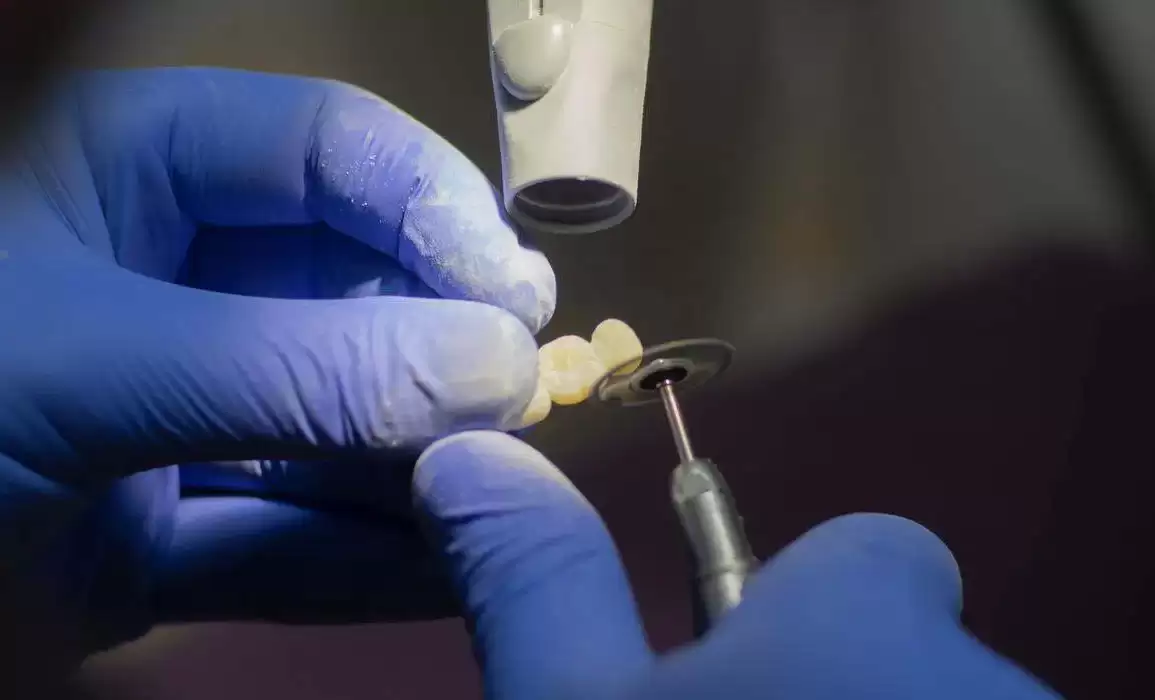

A bad taste that keeps returning after brushing is rarely just a brushing problem. If it sits at the very back of the mouth, around a partly erupted wisdom tooth, the source may be a small gum pocket that traps food, plaque and bacteria where a toothbrush can’t reach.
Wisdom teeth arrive late and often in a crowded corner. Some stay partly covered by gum or press against the tooth in front. That awkward position gives smell-producing bacteria a place to sit. Mouthwash may hide the smell for an hour. It won’t fix the pocket.
Bad breath can start in the gum flap around a wisdom tooth
When a wisdom tooth only partly breaks through, a flap of gum may sit over the crown. Food can slide under that flap during meals. Plaque builds there. The gum becomes sore, swollen and harder to clean, which lets the cycle repeat.
This is one reason wisdom teeth bad breath often feels different to morning breath. It comes back quickly. It can taste foul even after brushing. A back molar with deep grooves, a tight gum pocket and poor access is not a fair fight for a toothbrush.
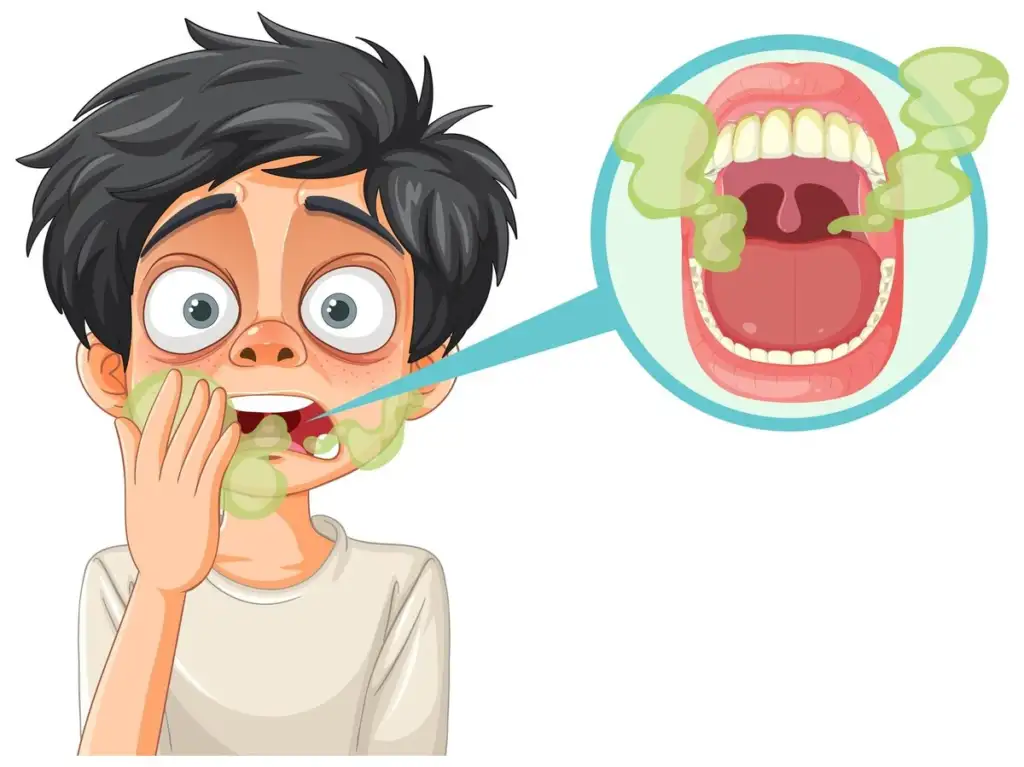
A bad taste may mean infection, not just trapped food
A sour, bitter or rotten taste needs more attention if it appears with swelling, throbbing pain, pus, fever, or trouble opening your mouth. Those signs can point to a wisdom tooth infection.
This often happens when bacteria collect around a partly erupted tooth and inflame the gum. The clinical name is pericoronitis. It can settle for a while, then flare again after food packs into the area or when your immune system is run down.
One counterintuitive point: the pain can ease while the problem remains. Pressure may drain slightly. Swelling may drop. The taste may still return because the pocket is still there. Repeating the same saltwater rinse every few weeks is not a plan. It’s a holding pattern.
How to tell brushing issues apart from wisdom tooth trouble
Bad breath has many causes: dry mouth, smoking or vaping, gum disease, reflux, tonsil stones, diet or dehydration. Wisdom teeth are only one possibility.
| What you notice | More likely cause |
| Bad breath mainly in the morning | Dry mouth, mouth breathing, plaque buildup |
| Foul taste from one back corner | Food trapped around a wisdom tooth |
| Swollen gum behind the last molar | Partly erupted or impacted wisdom tooth |
| Bad taste with pus, fever or facial swelling | Infection that needs prompt dental care |
| Breath improves after a professional clean | General plaque, tartar or gum inflammation |
A simple test helps, though it’s not a diagnosis. Gently clean around the back molar with a soft brush and rinse with warm salty water. If the taste improves briefly but keeps returning to the same spot, the area needs an exam.

Cleaning helps, but it has limits
Brush gently around the back teeth. Rinse with warm salty water after meals. Avoid aggressive poking with toothpicks. Don’t force anything under swollen gum. You can scratch the tissue and make it angrier.
Mouthwash can reduce bacteria for a short time. It can’t change the shape of a trapped tooth, clear decay under a gum flap, or create more room in the jaw.
If a wisdom tooth has enough space, your dentist may suggest better cleaning and review. If it keeps flaring, damages the tooth beside it, traps food, or decays in a spot that can’t be restored properly, wisdom teeth removal Melbourne may be the more sensible option.
Don’t wait for severe pain before booking
Bad breath can feel embarrassing, so people often try to solve it quietly. They brush harder. They buy a stronger mouthwash. They scrape their tongue. Those steps may help if the issue is general oral hygiene. They won’t solve a hidden pocket behind a third molar.
Book a dental review if the taste lasts more than a few days, keeps returning, or comes with wisdom tooth pain, swelling, bleeding, pus, ear pressure or jaw stiffness. Book sooner for facial swelling, feeling unwell, swallowing trouble or lockjaw.
At Affordable Dentist Melbourne, our wisdom teeth removal in Melbourne page explains assessment, X-rays, local anaesthetic and cost ranges. Get the area checked before a small recurring problem turns into an urgent one.
FAQs about wisdom teeth, bad breath and bad taste
Can a wisdom tooth smell bad without hurting?
Yes. A wisdom tooth can trap food and plaque before it becomes painful. You may notice a bad taste, local bleeding or a smell on floss first.
Will antibiotics fix a bad taste from wisdom teeth?
Antibiotics may help some spreading infections, but they don’t remove the cause if the problem is a gum pocket, decay or a poorly positioned tooth.
Can removing a wisdom tooth improve bad breath?
It can, if the wisdom tooth is the source of the smell. Removal takes away the hard-to-clean pocket. Bad breath can still have other causes, so a full oral check matters.
Clean the area gently, rinse with warm salty water after meals and avoid digging under the gum. Then book a dental exam if the smell or taste returns to the same back corner. At Affordable Dentist Melbourne, we can assess the area, arrange X-rays if needed and explain your treatment options clearly. If the problem is linked to a partly erupted wisdom tooth, we’ll let you know whether cleaning, monitoring or removal makes the most sense.