If you’re weighing up tooth replacement options in Melbourne, you’ll notice the conversation has shifted in recent years. More people are asking about fixed, full-arch options such as full dental implants rather than defaulting straight to removable plates. That doesn’t make dentures “bad”. It does mean patients are comparing comfort, long-term fit, and day-to-day function more closely than they used to.
Key takeaways
- Dentures can restore appearance and basic function, but they may loosen over time as the jaw changes.
- Full-arch implants aim to provide a stable bite, with different designs and timelines depending on your mouth and bone levels.
- There’s also a middle option: implant-retained dentures, which many people find more secure than conventional dentures.
Full Dental Implants vs Dentures: What’s the Difference?
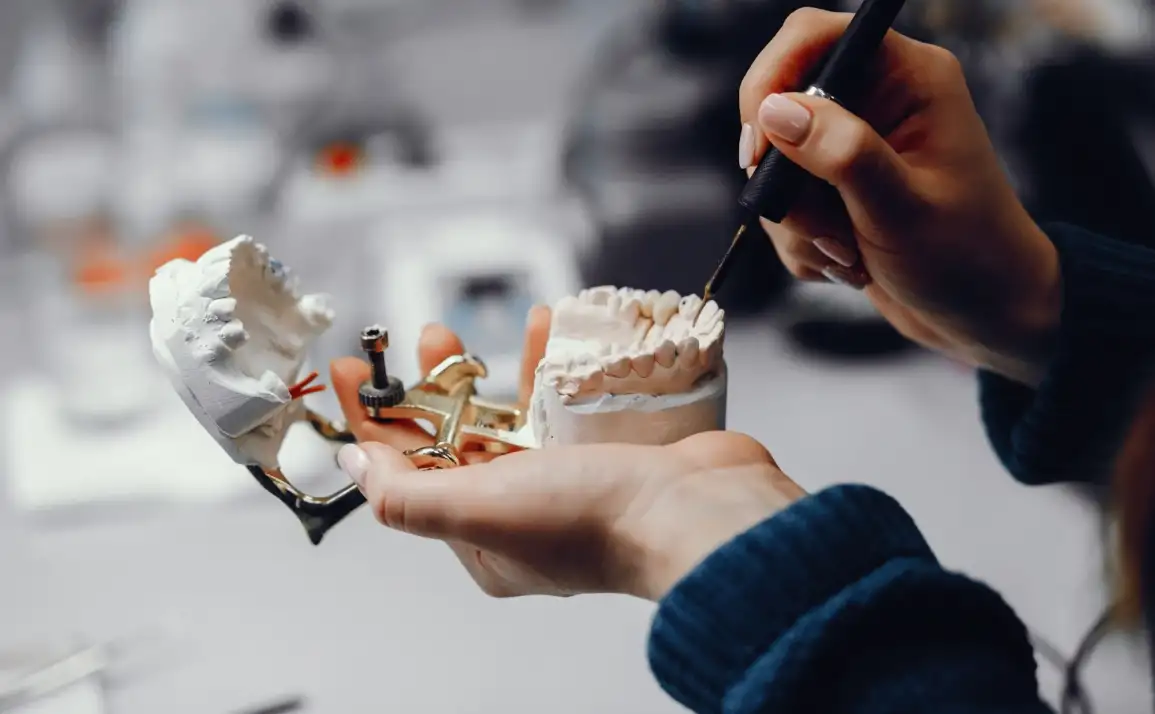
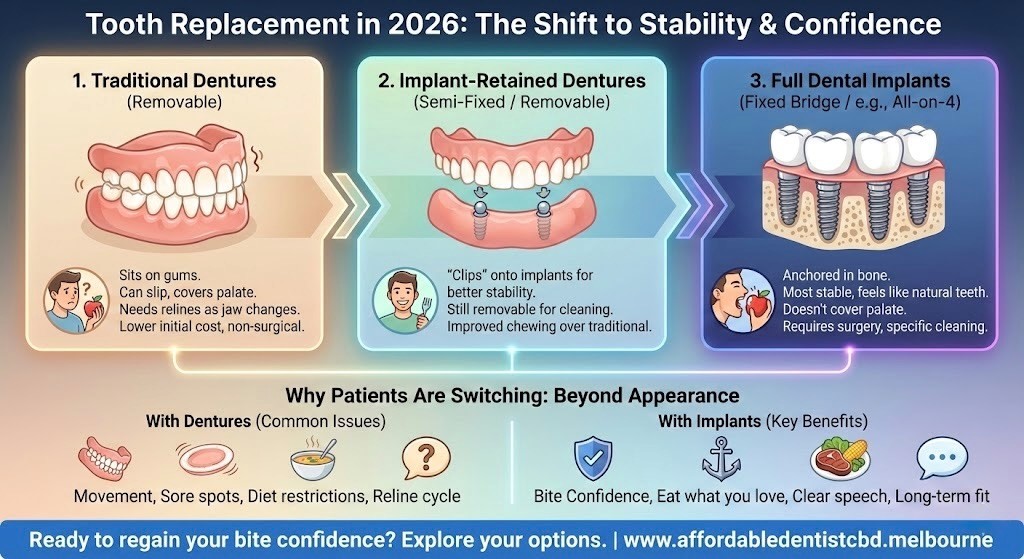
- Traditional dentures are removable false teeth made to sit on the gums and replace missing teeth. They can improve eating and speaking and are commonly made from acrylic, sometimes with a metal framework.
- Full dental implants for an entire arch are different. Instead of a plate resting on gum tissue, implants are placed into the jawbone and support a fixed bridge or a secured prosthesis. One well-known full-arch approach is All-on-4, which uses four implants to support a full-arch prosthesis in selected cases and follows a specific clinical protocol.
Between those two sits an option many people in Melbourne overlook: implant-supported dentures. These are still removable in many designs, but they “clip” onto implants for improved retention. Reviews consistently report higher patient satisfaction and function for implant-retained overdentures compared with conventional complete dentures, especially for stability and chewing.
Why More Australians Are Switching to Full Mouth Implants in 2026
The change isn’t about fashion. It’s largely about expectations. People want to eat a wider range of foods, speak without worrying a denture will lift, and avoid the ongoing cycle of relines and adjustments.
Cost and access play a role too. Some patients who once assumed implants were out of reach are now exploring dental implant payment plans in Melbourne offered through clinics or third-party finance (terms vary, so it’s worth reading the fine print). Even when someone decides implants aren’t the right fit, the process of comparing options tends to be more informed than it was a decade ago.
Full Dental Implants vs Dentures: Quick Comparison
People often research dental implants vs dentures because they want a practical, side-by-side view. Here’s how they differ:
- Stability: Full-arch implant solutions are designed to stay put during chewing and speaking; conventional dentures can shift, especially on the lower jaw.
- Maintenance: Dentures are removed for cleaning; fixed implant bridges are cleaned in the mouth like very solid “teeth”, often with extra tools (interdental brushes, water flossers).
- Fit over time: Dentures may need relines as the ridge changes; implant solutions can still need maintenance, but the day-to-day feel is often more consistent when stability is achieved.
- Suitability: Dentures work for many people; implants depend on general health, bone volume, smoking status, and oral hygiene habits.
Full dental implants cost in Melbourne: What Affects Pricing?
It’s tempting to ask for a single number, but full-arch treatment costs vary because the treatment itself varies. The factors that most often move the needle include:
- Number and position of implants: Some cases suit a four-implant design; others need more implants for support.
- Extractions and infection management: Removing failing teeth and stabilising gum health can change the sequence and complexity.
- Bone volume and added procedures: Some patients need grafting or other site preparation before implants can be placed safely.
- Prosthesis material and design: many clinics offer options such as zirconia full arch implants style bridges (zirconia frameworks) or acrylic-based alternatives, each with different pros, weight, and repair patterns.
If you’re comparing quotes, ask what’s included in the total plan: temporary teeth, follow-up visits, scans, and what happens if a component needs repair.
Comfort and Function: Eating, Speaking, and Everyday Confidence
For many people, the biggest day-to-day difference is bite confidence. Dentures can work very well, yet it’s common to hear complaints about movement on harder foods or soreness when a denture rubs. Full-arch implant options aim to reduce those issues by anchoring the bite.
Also Read: Thriving with All-On-4 Dental Implants: Your Comprehensive Guide to Life After Surgery
Procedure and Timeline: What to Expect with Full Arch Implants in Melbourne
Most full-arch implant journeys follow a few predictable stages:
- Assessment and planning: Exam, scans, discussion of goals and constraints.
- Stabilising oral health: Managing gum disease, extractions, and bite planning where needed.
- Implant placement: Sometimes with immediate temporaries, sometimes with a healing period first.
- Final restoration and maintenance: The “fit-and-function” stage, followed by regular reviews and cleaning to reduce peri-implant disease risk.
Timelines differ. The safest approach is the one matched to your bone quality, health history, and the design chosen.
Are You a Candidate? Who Should Consider Dentures Instead?
- Implants suit many adults, but not everyone.
- Low bone volume can limit options without grafting, smoking raises complication risks, and some medical conditions affect healing.
- Dentures remain a valid choice for people who want a non-surgical option, need a quicker solution, or are working within a strict budget.
- Many people also choose implant-retained dentures as a stepping stone: more stability than conventional dentures, without committing to a fully fixed bridge.
Choosing a Provider in Melbourne: What to Ask at Your Consultation
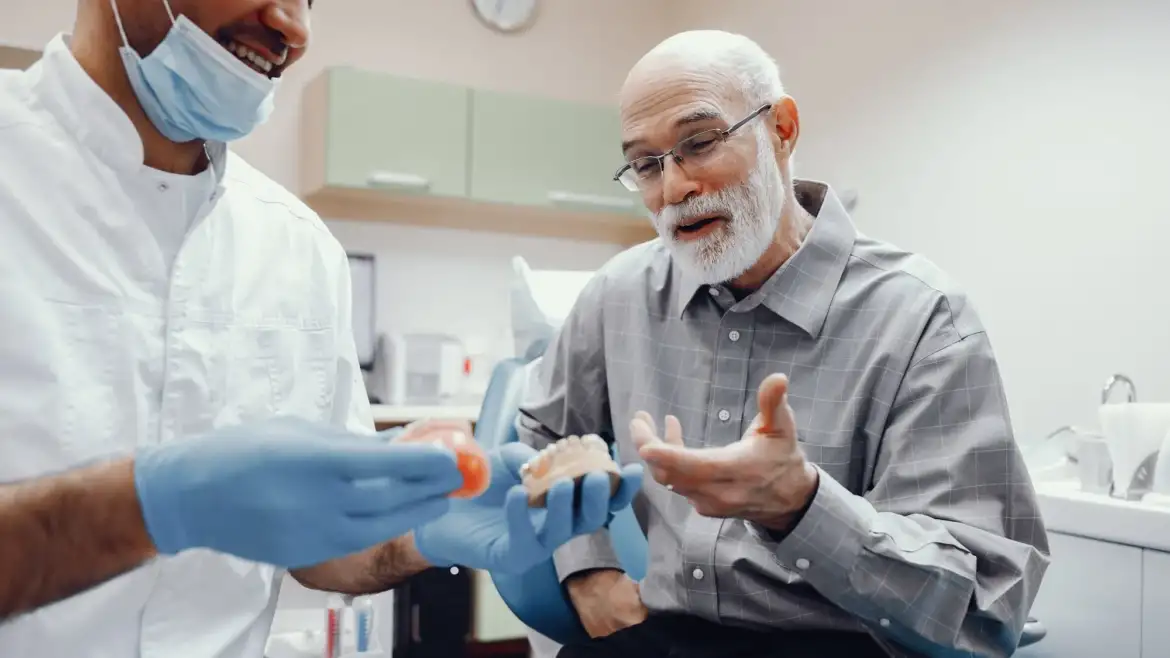
A good consultation should feel like a two-way conversation, not a sales pitch. Useful questions include:
- Who will place the implants and who will design the prosthesis?
- What scans are used for planning, and will you receive a written treatment plan?
- What are the realistic risks in your case, including peri-implant disease prevention?
- What maintenance is expected over 5 to 10 years?
If you’re looking for care in the CBD, Affordable Dentist Melbourne CBD can talk through options based on your oral health.
Frequently Asked Questions:
- How do I choose between full-arch implants and dentures?
Start with your priorities: stability, surgery tolerance, maintenance, and budget. Your dentist should explain trade-offs in plain language. - Do implant-retained dentures really feel different?
Many patients report better stability and chewing with implant-retained overdentures than conventional dentures. - Are implants “set and forget”?
No. They require daily cleaning and professional reviews because gum and bone inflammation can occur around implants.