A lot of people assume orthodontics is a young person’s game, then catch their reflection in a meeting-room window and notice a front tooth that has started to twist or a gap that wasn’t there a decade ago. If that sounds familiar, you’re not alone. Invisible braces after 40 are a common choice for adults who want straighter teeth without the look of brackets and wires, and the process is usually more practical than people expect.
Why teeth still shift in midlife
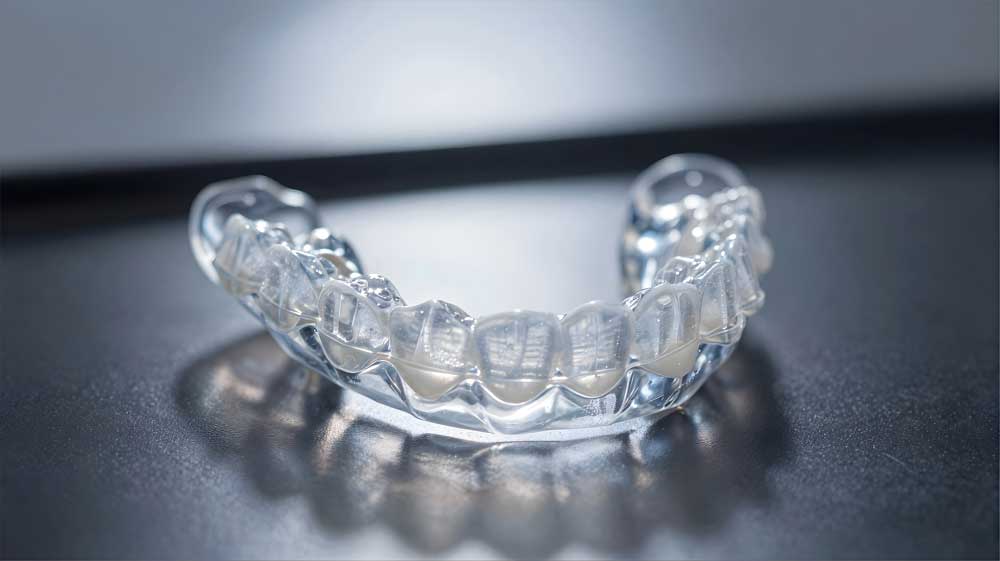
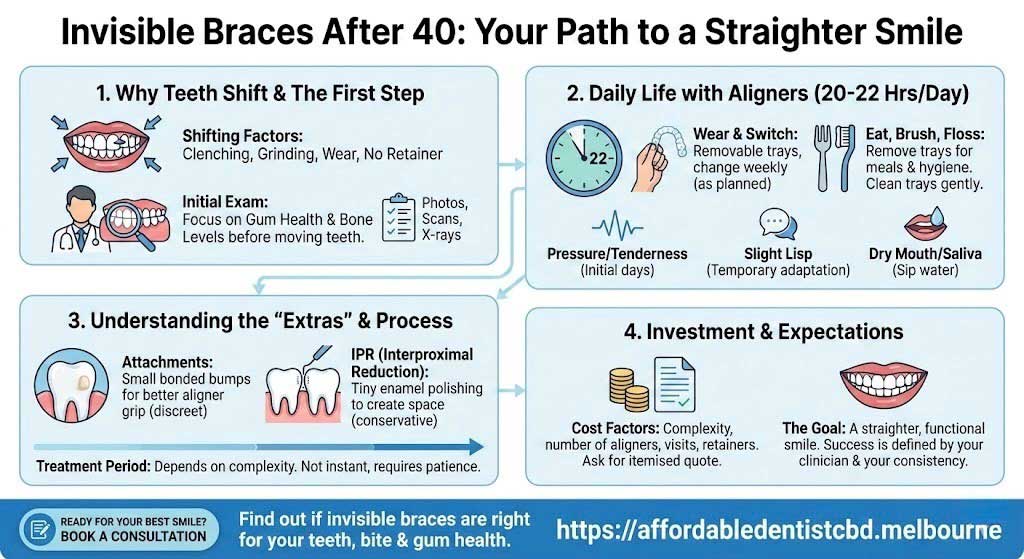
Teeth can and do move throughout adulthood. Some changes are gradual and linked to everyday forces: clenching, grinding, uneven tooth wear, and the simple fact that the supporting bone and ligaments respond to pressure over time.
Past orthodontic treatment doesn’t always “lock” teeth in place either, especially if retainers were dropped years ago. The good news is that adult teeth still respond to orthodontic forces; what matters more is the health of the gums and bone than the number of candles on the cake.
What happens at the first appointment
- Your dentist or orthodontist will look at alignment, bite, jaw function, and the condition of your teeth and gums.
- Expect photos and scans or impressions, and often X-rays to check roots and bone levels.
- For adults over 40, gum health deserves extra attention. If there’s active gum disease, the clinician may recommend treatment to settle inflammation before moving teeth.
- Periodontal status should be evaluated before, during, and after treatment because orthodontic forces can interact with existing gum issues.
Day-to-day life with clear aligners
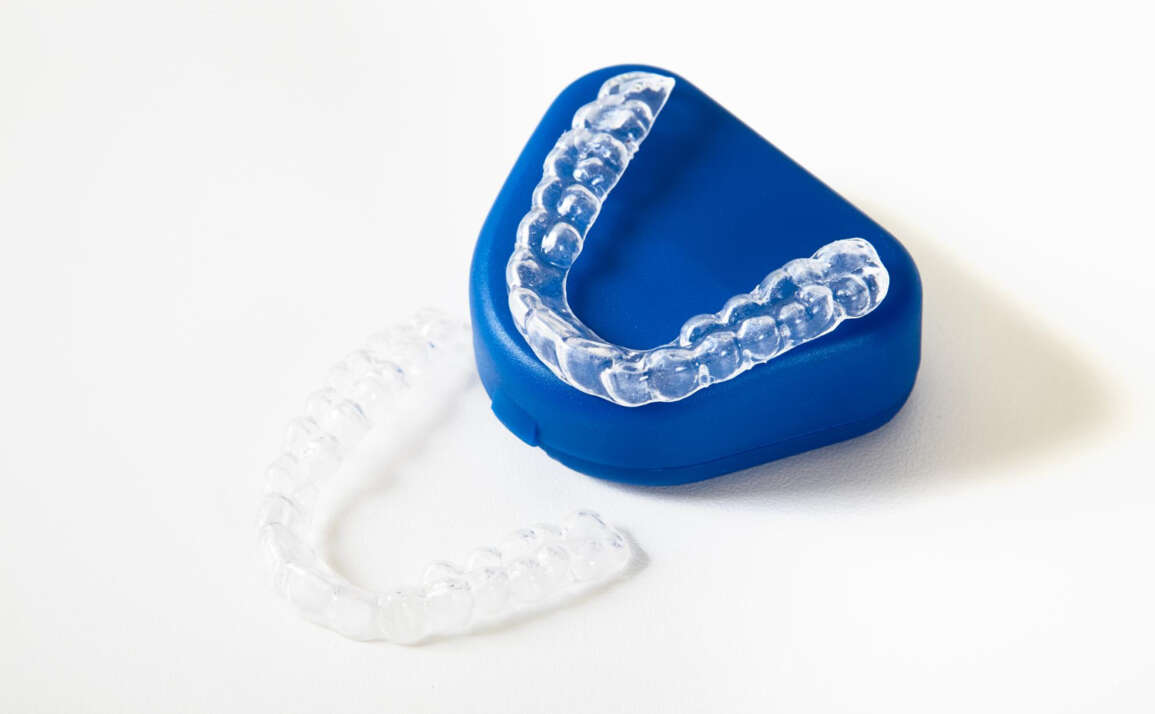
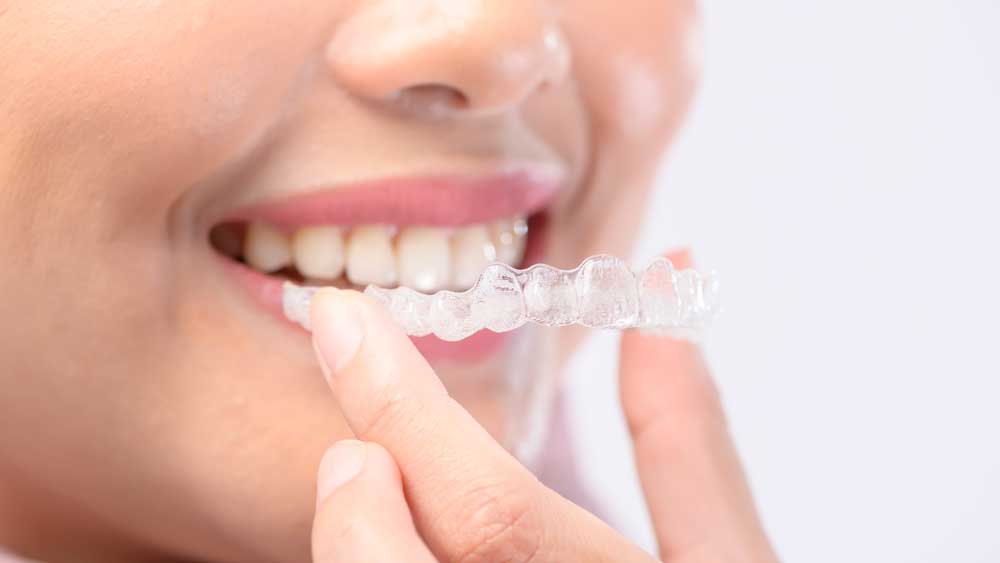
Most “invisible braces” for adults are clear aligner trays worn in a planned sequence. You remove them to eat and to brush and floss, then pop them back in. That removable design makes hygiene and dining easier than fixed braces, but it also means the result depends heavily on wear time.
Experts commonly recommend wearing aligners about 20–22 hours a day, changing to the next set on a schedule set by your clinician. If you routinely leave trays out for long lunches or forget them during a late night, the teeth may not track as planned. The usual fix is extending wear time, ordering extra trays, or doing refinements later on.
Early on, expect a few small adjustments:
- Pressure and tenderness: often strongest in the first couple of days after switching trays, usually manageable with simple pain relief if needed.
- Speech changes: a slight lisp can appear for a week or two, then settles as your tongue adapts.
- Dry mouth or extra saliva: both can happen; sipping water helps.
Rinse trays when you remove them, brush them gently, and keep them away from hot water, which can warp plastic.
Attachments, IPR, and other “extras” adults ask about
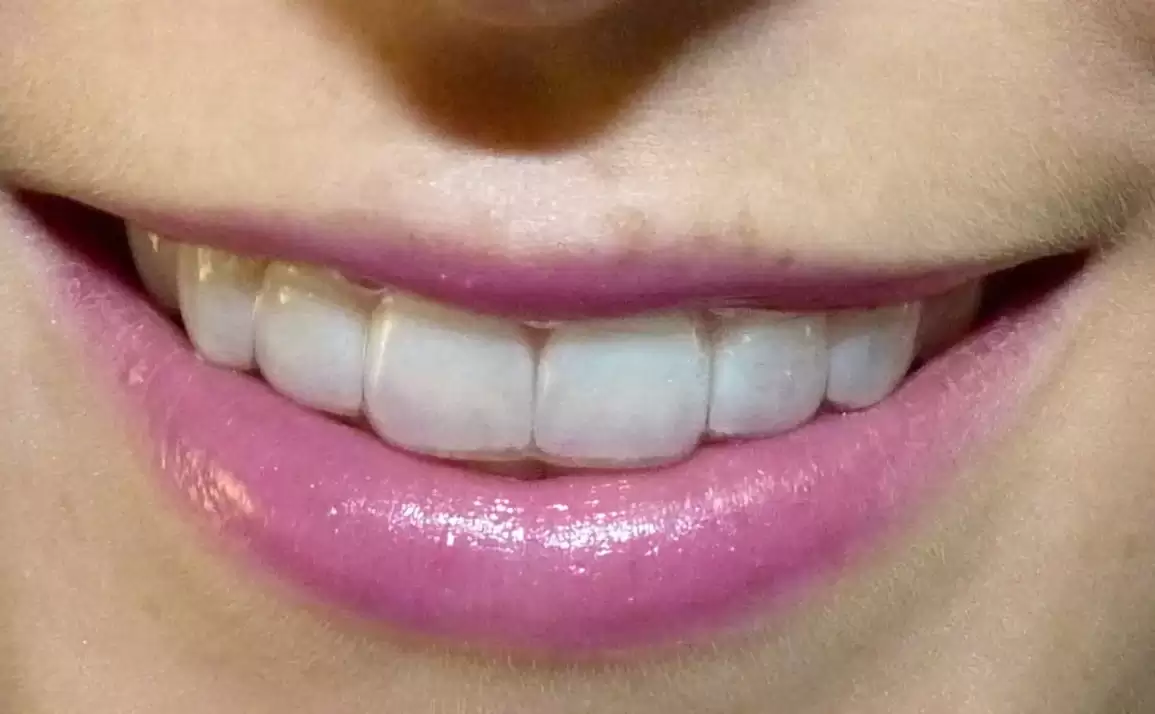
Some aligner plans use small tooth-coloured bumps (attachments) bonded to specific teeth. They give the tray better grip for certain movements. Adults often worry they’ll be obvious; in practice, most people won’t notice them unless they’re very close.
You may also hear about interproximal reduction (IPR). This involves removing a tiny amount of enamel between teeth to create space and improve how teeth fit together. It can sound alarming, yet it’s typically conservative and can reduce the need for extractions in suitable cases. A little sensitivity afterwards is possible, and your clinician should explain exactly where and why it’s planned.
Cost of invisible braces in Melbourne
If you’re researching treatment from the CBD out to the suburbs, you’ll notice that pricing varies widely. That’s because the fee often reflects more than just the trays.
Complexity of tooth movement, bite correction needs, the number of aligner sets, scans and records, follow-up visits, and the type of retention after treatment can all affect the total. Discuss costs directly with your dentist or orthodontist as part of planning.
A practical tip: ask for an itemised quote that covers reviews, potential refinements, and retainers. It makes comparisons far easier than chasing a single headline number.
What’s the treatment period like
Adults often appreciate that aligners can be discreet, but discretion doesn’t mean instant. Treatment time depends on what you’re correcting. Minor crowding might resolve in months; more complex bite work can take longer.
Your clinician should explain what “success” looks like for you, including any limits. Some movements are harder with aligners alone, and a clinician may recommend fixed appliances or a mixed approach if the case demands it.
Book a consultation at Affordable Dentist CBD Melbourne to find out whether invisible braces are suitable for your teeth, bite and gum health. You’ll receive a clear treatment plan with transparent costs and the next steps to get started.
Also Read: Why Invisible Braces Are the Perfect Choice for Working Professionals
Frequently Asked Questions:
1. Are invisible braces effective after 40?
Yes, in many cases. Teeth still move in response to steady pressure, and aligners can correct common adult concerns like mild to moderate crowding or spacing. The deciding factors are gum and bone health, plus consistent wear. Your clinician should check for gum disease and discuss any risks before starting.
2. How long do invisible braces take for adults over 40?
It varies with the complexity of the movement and how faithfully you wear the trays. Many plans involve changing aligners every one to two weeks, with total treatment ranging from a few months to longer for bite corrections. Missed wear time can stretch the timeline because teeth may not track as planned.
3. How many hours a day do I need to wear aligners?
Most orthodontic guidance recommends around 20–22 hours daily, removing trays only for meals, drinks other than water, and cleaning your teeth. That schedule gives the aligners enough contact time to move teeth predictably. If you regularly fall short, your provider may adjust the plan or add refinements later.
4. What is IPR (teeth shaving) and is it safe?
IPR removes a very small amount of enamel between certain teeth to create space and improve alignment. Done properly, it’s considered conservative compared with extractions. You might feel mild sensitivity for a short time. Your clinician should explain the exact amount and the reason it’s needed in your plan.
5. How long do I need to wear retainers after invisible braces?
Most people need retainers straight after treatment because teeth can drift as the supporting tissues settle. Many orthodontic providers recommend full-time wear at first, then night-time wear, and some suggest keeping a long-term routine to maintain alignment. Your provider will tailor the schedule to your bite and relapse risk.